Can You Swim Inside a Cave in Mallorca?
Yes — and it's one of the most memorable things you can do on Mallorca's east coast. Here's what swimming inside an anchialine sea cave actually feels like, and how to do it safely.
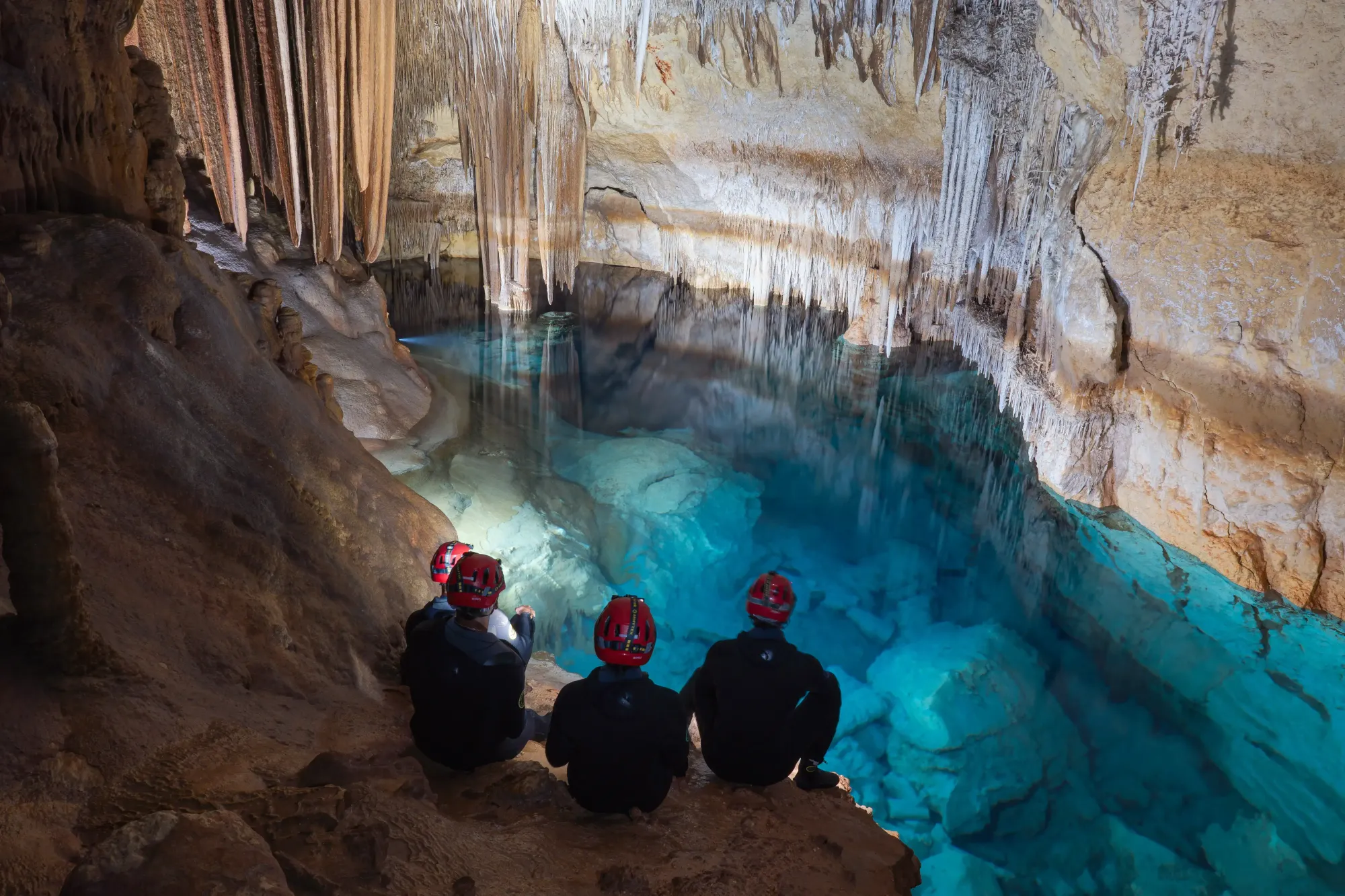
The Magic of Mallorca's Anchialine Caves
Some of Mallorca's sea caves are connected not just to the sea, but to the island's underground freshwater table. Caves like this are known as anchialine caves, and they create swimming conditions you won't find in the open sea: still, often crystal-clear water, partially or fully enclosed by rock, sometimes lit by daylight from above and sometimes only by your own headlamp.
The best-known example near Porto Cristo is Cova des Coloms, where a large pool of brackish water sits beneath a partially open cave roof — daylight, rock, and water combining in a way that's genuinely difficult to describe until you've seen it.
What Is It Like to Swim in an Underground Lake?
The first thing most people notice is the quiet. Sound behaves differently in an enclosed rock chamber — voices carry, echo, and seem to come from everywhere at once. The second thing is the water itself: often noticeably clearer than the open sea, and cooler, especially as you move toward the deeper, darker sections.
In some spots, you'll see a halocline — a faint, shimmering layer in the water where less dense fresh groundwater sits above denser seawater. It can look almost like a heat haze underwater, blurring everything below it. Combined with a waterproof headlamp picking out stalactites on the walls and ceiling, it's one of the more otherworldly sights you'll encounter on the island.
Depth varies across these pools — shallow enough to stand in some areas, well over head height in others. Most guided visits stick to routes where the group can move together comfortably, with the guide pointing out where it's shallow enough to rest.
Safety First: Why You Need a Wetsuit and a Guide
Two things make swimming in these caves accessible to people who wouldn't necessarily describe themselves as strong swimmers. The first is a 5mm wetsuit, which provides enough buoyancy that floating takes almost no effort — a genuinely different experience from swimming in normal swimwear. The second is a guide, who knows the cave, sets a manageable pace, and can offer support if anyone needs it.
The water is also noticeably cooler than the surrounding sea, particularly near the freshwater layer — another reason a proper wetsuit matters, beyond just buoyancy. For more on what to expect and how operators prepare for trips, see is sea caving safe?
No, there's nothing to worry about in the water
These caves aren't home to anything dangerous — no currents to speak of inside the chamber, and nothing in the water that poses a risk to visitors. The main considerations are temperature and depth, both of which a wetsuit and a guide handle comfortably.
Which Caves Allow Swimming?
Not every cave on Mallorca has a swimmable interior — many are dry, or require technical access that puts them out of reach for visitors. Cova des Coloms is the clearest example of a swim-in sea cave that's realistically accessible, either via a long coastal route or by guided boat. Our guide to the best sea caves in Mallorca covers the others.
How to Experience It
If swimming inside a cave is the part of this guide that's caught your attention, the most straightforward way to do it is a guided boat trip that includes the wetsuit, light, and guidance you'll want for the experience.
Frequently Asked Questions
It's noticeably cooler than the open sea, especially in the deeper parts of caves like Cova des Coloms, where fresh groundwater mixes with seawater. This is exactly why guided trips provide thick wetsuits (typically 5mm) — they keep you warm and add buoyancy, so the cold isn't a barrier to enjoying the swim.
A halocline is the visible boundary layer where less dense fresh or brackish groundwater sits on top of denser seawater. In some of Mallorca's anchialine caves, this creates a shimmering, almost blurred optical effect in the water column — one of the more memorable sights for first-time visitors.
No. These are not habitats for anything dangerous to humans. You may see small fish or crustaceans adapted to the cave's brackish water, but there is nothing inside Mallorca's accessible sea caves that poses a threat to visitors.
Confidence in the water matters more than speed or technique. A wetsuit provides significant buoyancy, making floating and gentle swimming far easier than in normal swimwear. Guides keep groups together and adjust pace, so strong swimming ability is not a requirement for most guided sea cave visits.
Continue exploring
Cova des Coloms, Mallorca: The Complete Sea Cave Guide
A full guide to Mallorca's Cova des Coloms — what's inside, how to reach it, and the Menorca name mix-up explained.
Read moreIs Sea Caving Safe? A Guide for Beginners and Families
A reassuring, practical look at the real safety considerations behind a guided sea cave trip.
Read moreSea Cave Tours in Mallorca: How to Choose
Hiking tours vs boat tours, what premium operators include, and our recommended guided option.
Read more